Osetra vs Kaluga vs Siberian Caviar: How They Differ
Species comes first
Osetra, Kaluga hybrid and Siberian caviar differ in species, grain size, texture and flavour: Osetra is nutty-fruity, Kaluga has larger buttery grains, and Siberian has smaller, silky pearls. Each is salt-cured sturgeon roe, with its own character at the table.
Osetra comes from Acipenser gueldenstaedtii; Siberian comes from Acipenser baerii. Kaluga hybrid combines Huso dauricus and Acipenser schrenckii. Our Reserve Osetra, Obsidian Siberian and Kaluga Sovereign Reserve bring those distinctions into focus. Nero Pearl adds Italian White Sturgeon, Acipenser transmontanus. Ember Pearl Trout Roe comes from rainbow trout and is roe, not caviar.
Osetra: texture and a nutty-fruity finish
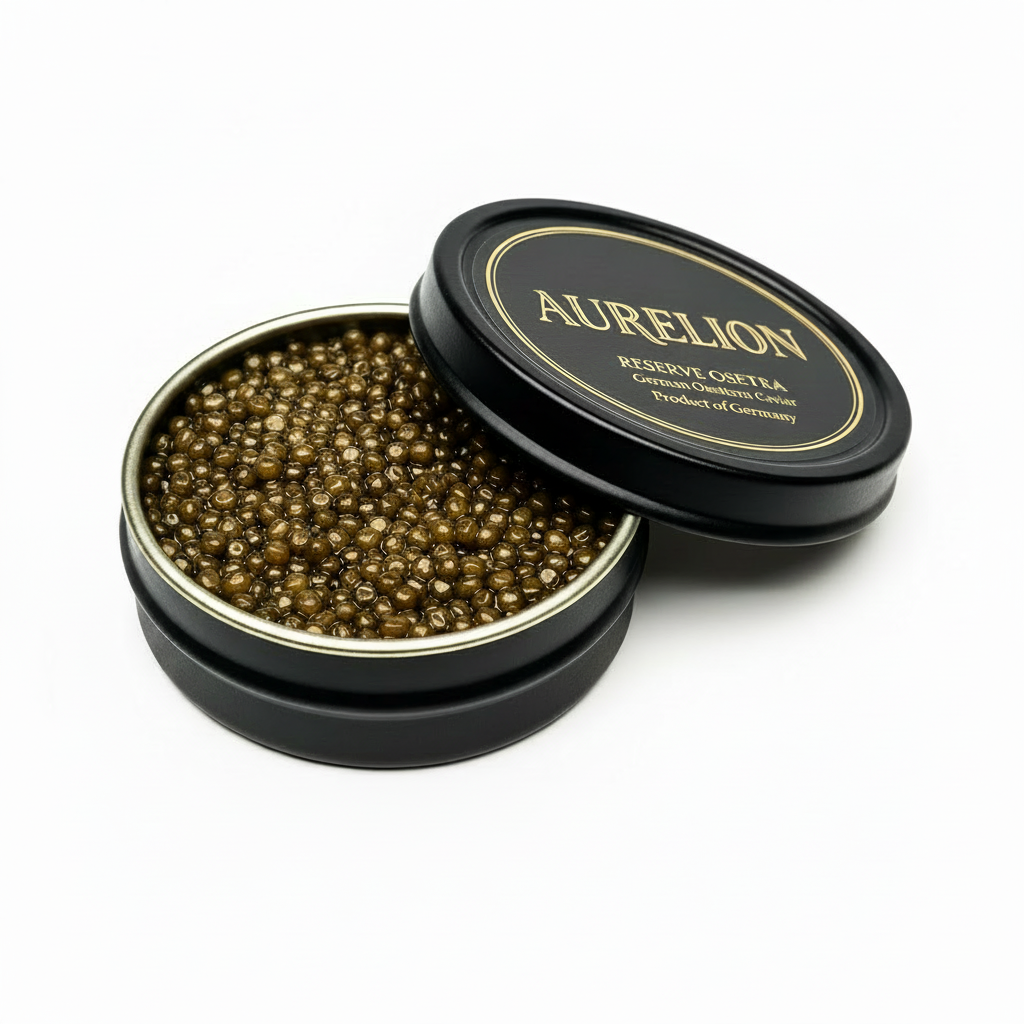
Osetra generally has medium-sized eggs of 2.5–3.5mm, ranging from golden-brown to dark brown. A firm bite gives way to buttery, nutty and fruity notes. Grain size varies between lots. Colour is one part of the comparison; the pearl’s membrane, aroma and finish also tell you about the caviar you are tasting.
Our German Reserve Osetra has semi-firm pearls of 3.3–3.6mm, rich buttery flavour and nutty-fruity notes. Its long finish is lightly briny and subtly fruity. Serve it chilled by the spoon, or with blinis and crème fraîche. Brut Champagne, mineral white wine and a clean martini each suit this combination of richness and gentle salinity.
Kaluga hybrid: larger grains and buttery sweetness
Kaluga hybrid is often called River Beluga, but it is not Beluga from Huso huso. Its eggs generally measure 3.5–4mm or larger, with colours from golden to darker tones. The larger grain creates a distinct impression on the spoon: size, firmness and flavour meet in a single bite.
Our Kaluga Sovereign Reserve has Far East river basin heritage and extra-large, firm golden grains. Butteriness, sweet brine and a nutty undertone lead into a long creamy finish. Imperial is a producer-specific designation, not a universal grade. Look beyond that word to the grain, aroma, texture and balance of the caviar itself.
Siberian and White Sturgeon: two other reference points
Siberian Sturgeon generally produces smaller to medium grains of 2–2.5mm. Our Obsidian Siberian is raised in a Polish nature preserve. Its silky mouthfeel carries balanced buttery flavour, hints of the sea and a lingering nutty finish. The 28g tin is a starting point for a first experience, especially if you prefer a supple texture.
Nero Pearl comes from Northern Italian White Sturgeon. Its large, creamy pearls have mild Mediterranean salinity and a clean oceanic finish. Taste it beside Obsidian Siberian to explore the contrast between creamy larger pearls and a silky smaller-to-medium grain. Consider how each feels at the first bite and how its flavour develops after the initial brine.
Compare the same way you intend to serve
Taste a small portion on its own before introducing accompaniments. Keep both tins chilled and use a non-reactive spoon. Compare initial salinity, the central buttery or nutty notes, texture and finish. Natural colour differences do not establish a quality hierarchy. A clean aroma, intact eggs and balanced flavour matter across all four sturgeon selections.
We offer our four core sturgeon selections in 28g, 56g, 112g and 198g tins. Choose your quantity for the occasion, then match the caviar to the texture and pairing you enjoy. Explore What Is Caviar? for species and production, and Caviar Grading Systems for egg integrity, colour consistency, aroma, salinity and finish.